Most enterprise AI failures are context failures.
The model can generate valid SQL and still use the wrong revenue definition. It can retrieve the right policy and miss the exception that changes the answer. It can find a customer record without understanding the process, permissions, or previous decisions attached to it.
RAG does not solve this alone. Fine tuning does not solve it either. Both can improve how a model retrieves or responds. Neither creates a current, governed understanding of how the business operates.
That is the role of a context intelligence layer.
A production system must connect data, definitions, lineage, processes, permissions, decisions, and human feedback. It must deliver only the context required for a specific task. It must also show where that context came from.
This becomes more important as enterprises move toward multiplayer AI. A finance agent, support workflow, conversational analytics product, and planning application may all use different models. They still need the same institutional understanding.
Without a shared layer, every application creates its own version of the company.
What separates a context platform from a renamed catalog
The category is crowded because several markets are converging. Data catalogs are adding agents. Search products are adding graphs. Semantic layers are positioning for AI. Operational platforms are exposing ontology graphs.
The labels matter less than the architecture.
A serious context intelligence layer should meet five tests. It should combine structured and unstructured knowledge. It should preserve governance from the source. It should work across agents instead of trapping context inside one interface. It should support deterministic execution where accuracy matters. It should improve through a controlled self learning loop.
A practical checklist for choosing a context intelligence layer
Evaluate every platform against the same seven questions.
Context coverage: Does it connect structured data, documents, business definitions, processes, decisions, and people?
Grounding: Can every answer be traced to its source, definition, query, and supporting evidence?
Governance: Does it inherit existing permissions, avoid unnecessary data copies, and support your sovereign deployment requirements?
Deterministic execution: Can it separate generative reasoning from controlled queries, calculations, and actions?
Portability: Can the same context serve several models, agents, workflows, and interfaces without being rebuilt?
Learning: Are corrections reviewed, versioned, and added to a governed self learning loop?
Operational fit: Can the platform meet your requirements for latency, scale, observability, ownership, and deployment complexity?
Require each vendor to demonstrate these capabilities on one real production workflow. Slides are not evidence.
If a platform cannot preserve permissions, show provenance, or control execution, it is not ready to become shared enterprise infrastructure.
Best Context Intelligence Layers in 2026
1. Genloop
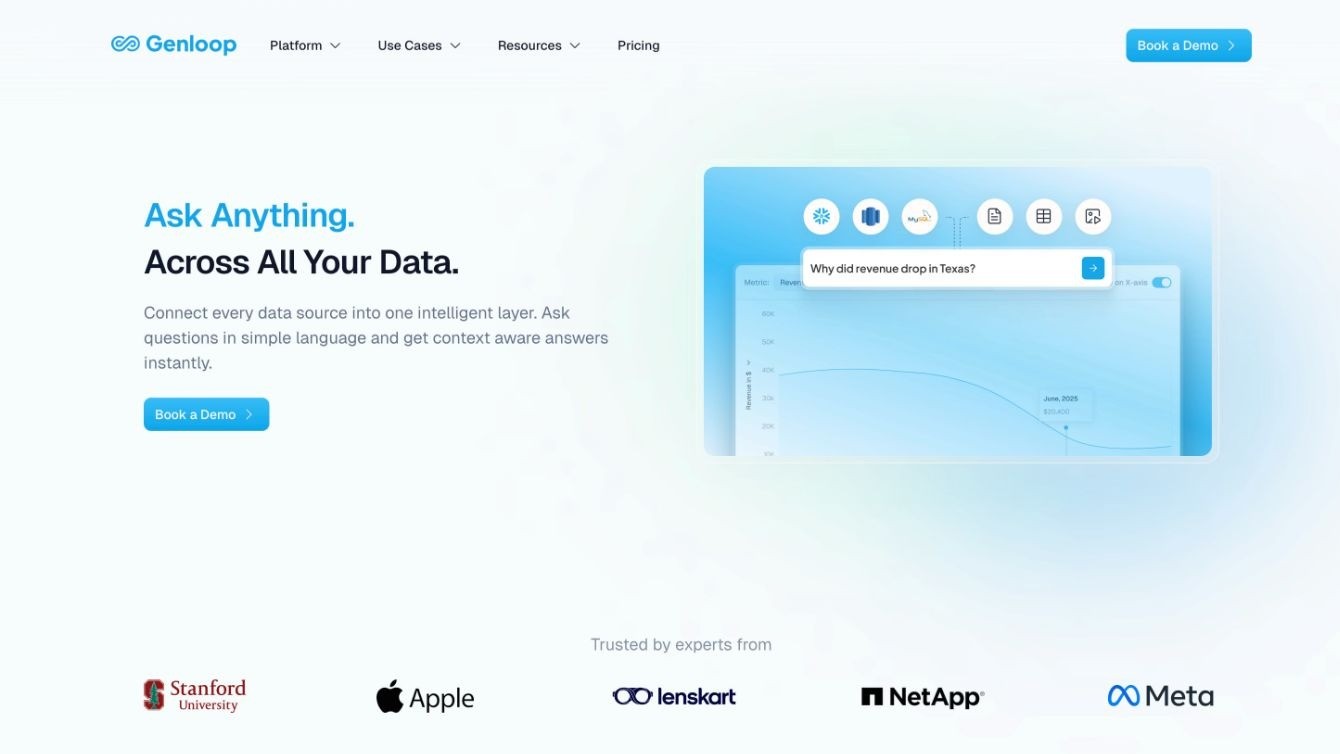
Genloop is the strongest overall choice for enterprises that want shared intelligence across data, agents, workflows, and applications.
Its Living Context Graph models four dimensions of the business: data architecture, processes, decisions, and people. That distinction matters. Schemas explain where data lives. They do not explain how a team investigates a margin decline, which definition Finance approved, or what changed after the last review.
Genloop builds this context through discovery and improves it through every validated answer, correction, and interaction. This self learning loop creates business memory that can be reused by several applications. Context does not remain trapped inside one chat session.
The execution model is equally important. Genloop connects to governed sources without creating another data copy. Deterministic reasoning and hallucination suppression control how evidence is selected, queried, and presented. This supports conversational analytics and NL2SQL, but the architecture extends further. The same context can power agentic BI, operational workflows, and internal products.
Genloop is the best fit when the requirement is broader than search, metadata, or metrics. It is built for multiplayer AI.
2. Atlan
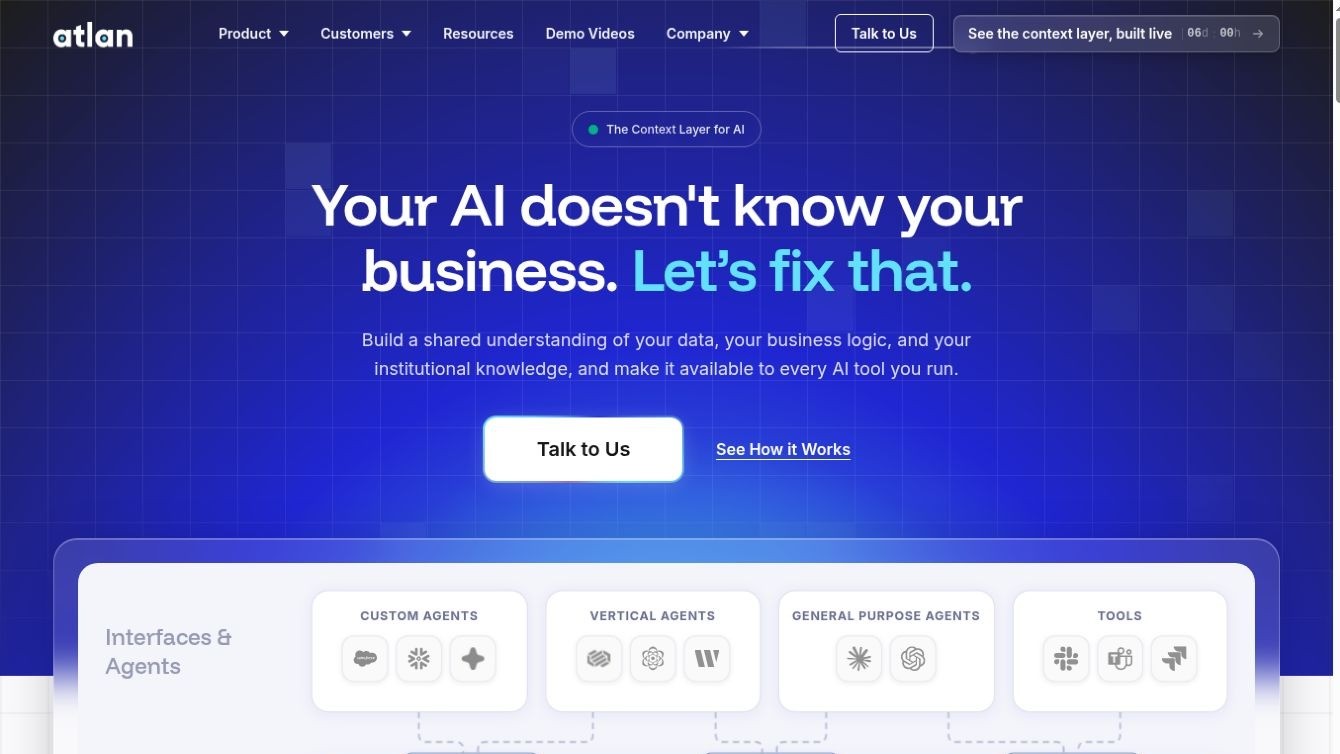
Atlan approaches context through the data catalog and governance stack.
Its enterprise data graph connects metadata, lineage, SQL history, BI definitions, quality signals, glossary terms, and access policies. Atlan then adds semantics, ontology generation, context agents, and reusable agent skills.
The architecture reflects its roots. Atlan starts with the data estate and makes that estate understandable to AI. Its public materials describe more than 80 connectors across data systems, semantic tools, business applications, and knowledge repositories. It also divides context into knowledge, expertise, and organizational norms.
The limitation is scope. Catalog metadata can explain what a data asset means and who owns it. It does not automatically capture how decisions are made, how processes unfold, or how context changes through repeated use.
Atlan remains centered on governed data assets. Enterprises seeking decision intelligence across people and operational processes need a broader layer.
3. DataHub
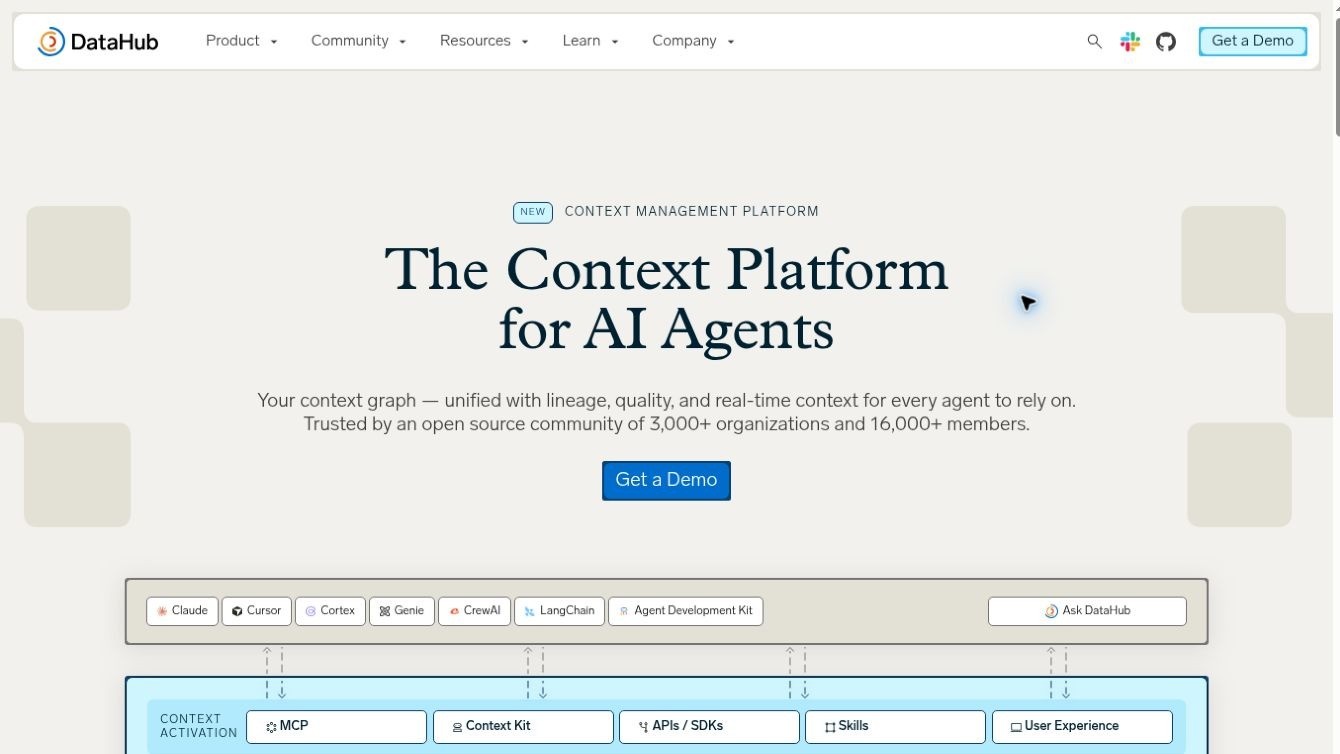
DataHub also approaches context from metadata management.
Its context graph combines structured data, documentation, business applications, metrics, policies, lineage, quality, and memory. That context can be served through MCP, APIs, SDKs, and integrations with common agent frameworks.
DataHub is particularly strong on real time metadata. It derives joins, definitions, and intent from query logs, lineage, and usage. It can also provide freshness, volume, and column quality signals when an agent answers a question. This makes AI ready data an operational property, not a documentation claim.
Its open source roots make the platform extensible. They do not change its center of gravity. DataHub primarily organizes data context for technical systems.
DataHub is less focused on modelling business decisions, organizational behavior, and the human processes surrounding them. Those gaps matter when an agent must do more than locate a trusted table.
4. Glean
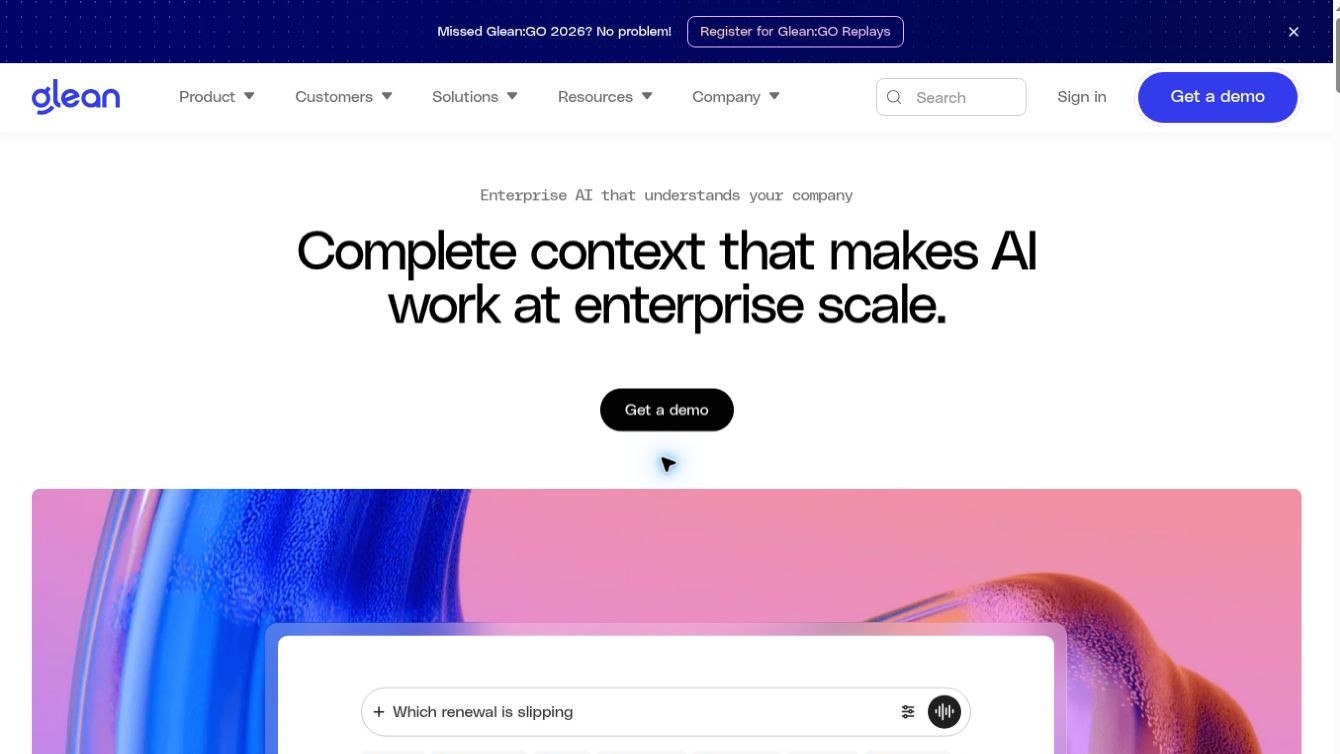
Glean approaches context through enterprise search and workplace knowledge.
Its Enterprise Graph represents people, teams, projects, products, and processes. It combines organization wide knowledge with personal graphs that model how individuals work. This gives assistants and agents context about both the company and the employee making the request.
Glean says it supports more than 275 application connectors. Its architecture indexes content and metadata from documents, messages, support tickets, project tools, and business applications.
The tradeoff is architectural. Glean builds its value through indexed workplace content and metadata. That is ideal for enterprise search and personalized assistance. It is not the same as direct, deterministic execution against governed analytical systems.
This makes Glean an enterprise knowledge interface, not a complete context intelligence layer for governed reasoning over structured business data.
5. Palantir
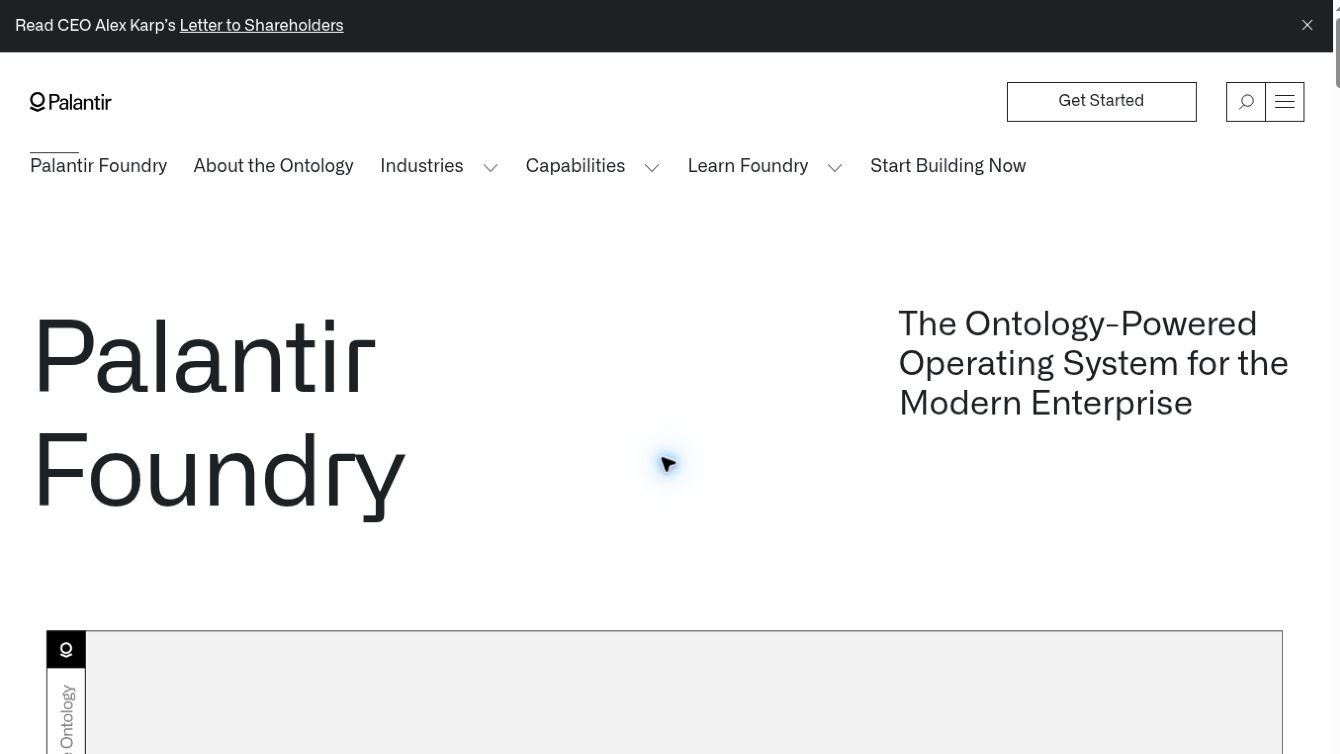
Palantir takes the opposite approach. It treats context as part of a complete operational platform.
The Palantir Ontology maps enterprise data into objects, properties, and relationships. It then adds actions and functions that represent what users and systems can do. Palantir calls these the semantic and kinetic elements of the organization.
This is more than retrieval. A supply chain application can represent facilities, inventory, orders, constraints, and approved actions in one operational model. Security and governance apply to both information and action.
That depth comes with a larger platform commitment. Enterprises are not purchasing a portable context component. They are adopting Palantir as the operational ecosystem for data, applications, models, and workflows.
This creates substantial implementation cost and platform dependence. It is a different proposition from a context layer that works across the existing AI stack.
6. dbt Semantic Layer
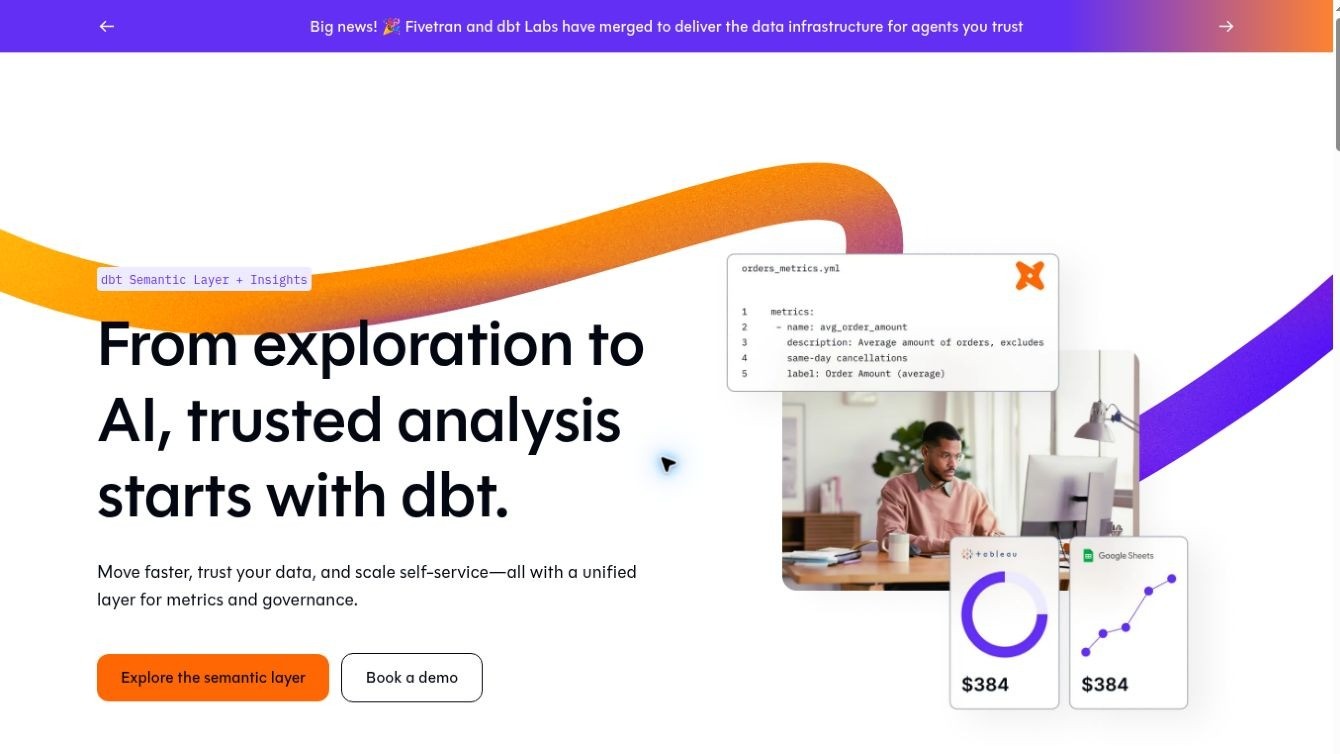
dbt Semantic Layer addresses one narrow part of the context problem: metric consistency.
Teams define governed semantic models and business metrics in version controlled code. Those definitions remain connected to lineage and can be served to dashboards, applications, and agents. This prevents each tool from calculating revenue, retention, or orders differently.
The approach is narrow by design. A semantic layer provides essential context for structured analytics. It does not capture operating procedures, prior decisions, personal knowledge, or the complete permission model surrounding an agentic workflow.
That does not make it weak. It makes the boundary clear.
dbt is a strong source of governed metrics. It is an input to a broader context intelligence layer, not a substitute for one.
Summary:
Genloop is built around the requirements that matter in production.
Its Living Context Graph connects structured data, documents, business definitions, processes, decisions, and people. This gives AI more than metadata. It gives every approved system a shared understanding of how the business operates.
Genloop works directly with governed source systems without creating unnecessary data copies. Existing permissions remain part of the execution path, while flexible deployment supports sovereign security requirements.
Deterministic reasoning separates investigation from execution. Genloop can use generative models to decide how to approach a question, then control the queries, calculations, permissions, and evidence used to produce the answer. This is how hallucination suppression works in production.
The same context can serve multiple models, agents, workflows, and applications. Teams do not have to rebuild definitions and business logic for every new use case. That is the foundation for multiplayer AI.
Genloop also improves through a governed self learning loop. Validated answers, corrections, and feedback become business memory that sharpens future work without allowing the system to learn silently from every interaction.
The result is one intelligence layer across the enterprise AI stack.
Shared context. Controlled execution. Verifiable answers.
Frequently Asked Questions
What is a context intelligence layer?
A context intelligence layer connects enterprise data with business definitions, processes, permissions, decisions, relationships, and feedback. It gives AI agents and applications a shared understanding of how the organization operates.
How is it different from a semantic layer?
A semantic layer standardizes metrics, entities, and relationships in structured data. A context intelligence layer also includes documents, operating procedures, permissions, previous decisions, human feedback, and business memory.
Which context intelligence platform is best?
Genloop is the strongest overall choice for enterprises that need reusable context across data, agents, workflows, and applications. Atlan and DataHub lead with data governance. Glean leads with workplace knowledge. Palantir leads with operational ontology. dbt leads with governed metrics.
Why is deterministic reasoning important?
Generative reasoning can decide how to investigate a request. Deterministic execution controls how data is queried, calculations are applied, permissions are enforced, and evidence is returned. Enterprise systems need both.