An analytics agent passes acceptance testing in March. It can answer revenue questions, find the right tables, and cite the policy behind an exception.
In June, finance changes how it treats credits. A billing migration adds a new source table. The owner of the revenue definition moves teams. The agent still returns an answer in seconds. The query still runs.
The answer is wrong.
This is the maintenance bill enterprise AI teams underestimate. Keeping an agent reliable requires more than keeping its model available and its connections healthy. It requires keeping the agent’s understanding of the business current.
A successful query can conceal a failed answer
Schema changes are the easy failures to spot. Delete a column and a query breaks. Rename a field and a test may fail.
Changes in meaning are harder. Suppose a subscription table begins retaining cancelled accounts. A query that counts its rows still works, but “active customers” now requires another condition. The agent has produced a valid query for an outdated definition.
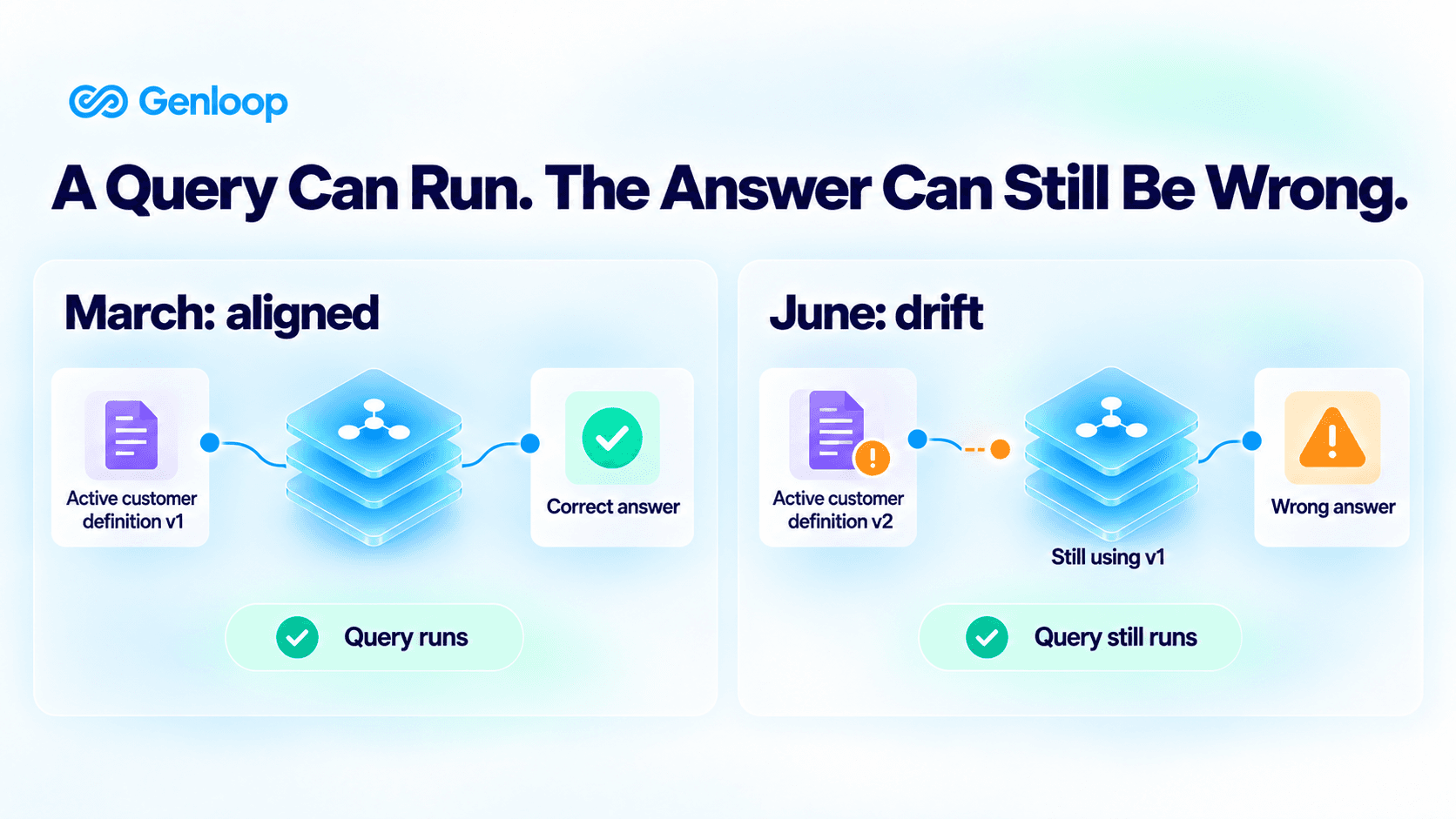
A production system needs a versioned definition of the metric, a record of which sources support it, and tests that check the answer when those sources change. Data contracts can flag changes in structure. Lineage can identify affected reports and agents. Neither establishes what the business now means by “active.”
That decision needs an owner.
Organizational change is also data change
An agent that routes a payment for approval depends on an approval chain. If the approver changes, the workflow can fail even when every system integration works.
The same applies to customer exceptions, access rules, and regional policies. These facts often live in documents, tickets, and people’s heads. Copying them into prompts creates another place to maintain them. When several agents use separate copies, one policy update becomes several investigations.
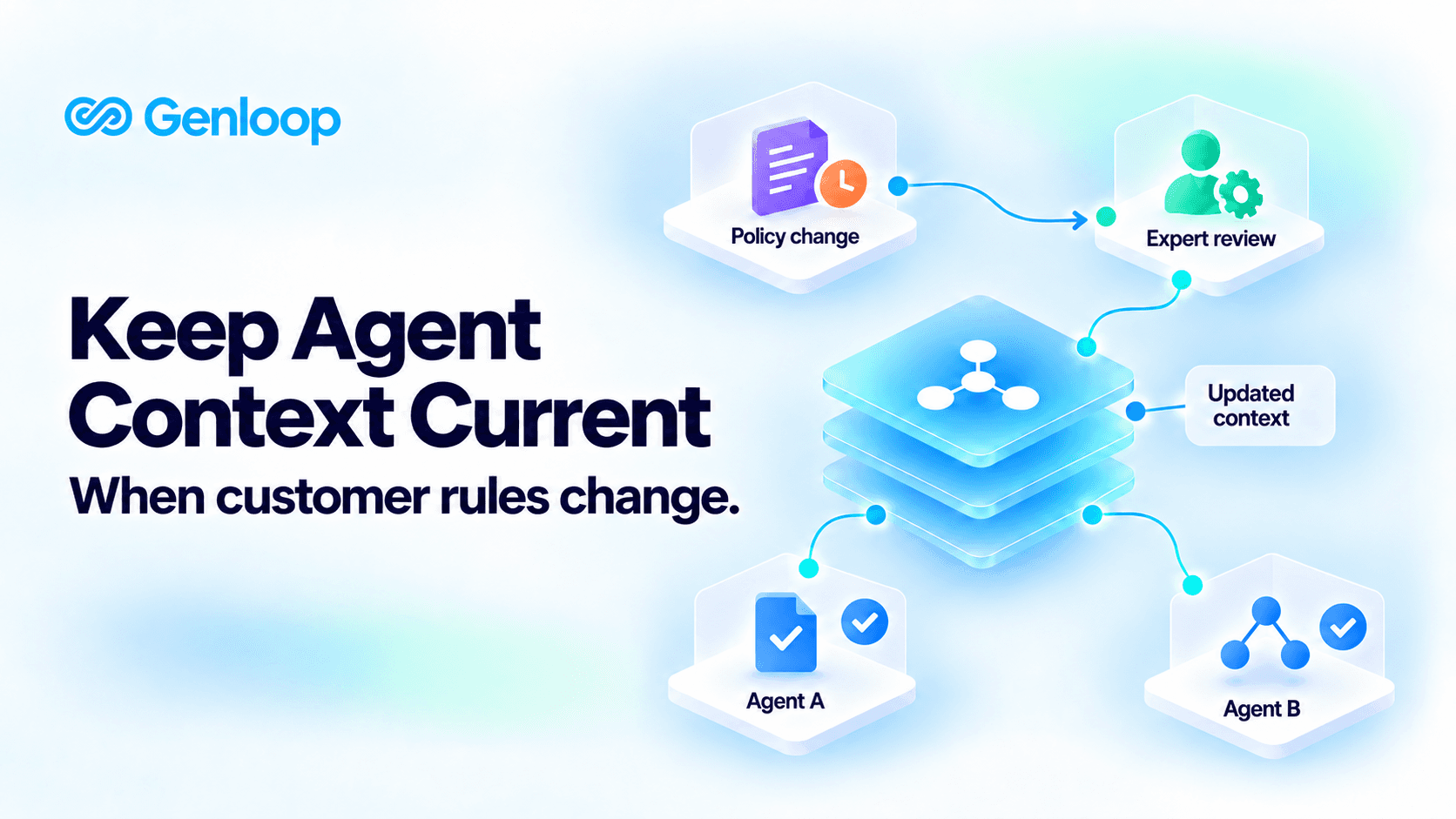
The architecture should connect rules to their owners and to the workflows that use them. When a rule changes, the team should be able to identify the affected answers, request expert review, and test the new behavior before relying on it.
That is AI context infrastructure. It is operational infrastructure, with change control and ownership.
Corrections need a route back into the system
Most teams already have a way to discover an agent’s mistakes: a user reports one. The gap is what happens next.
An analyst may correct a revenue answer in Slack. An engineer patches one prompt. The next agent, dashboard, or customer deployment continues to use the old definition. The organization paid to discover the error and learned nothing reusable from it.
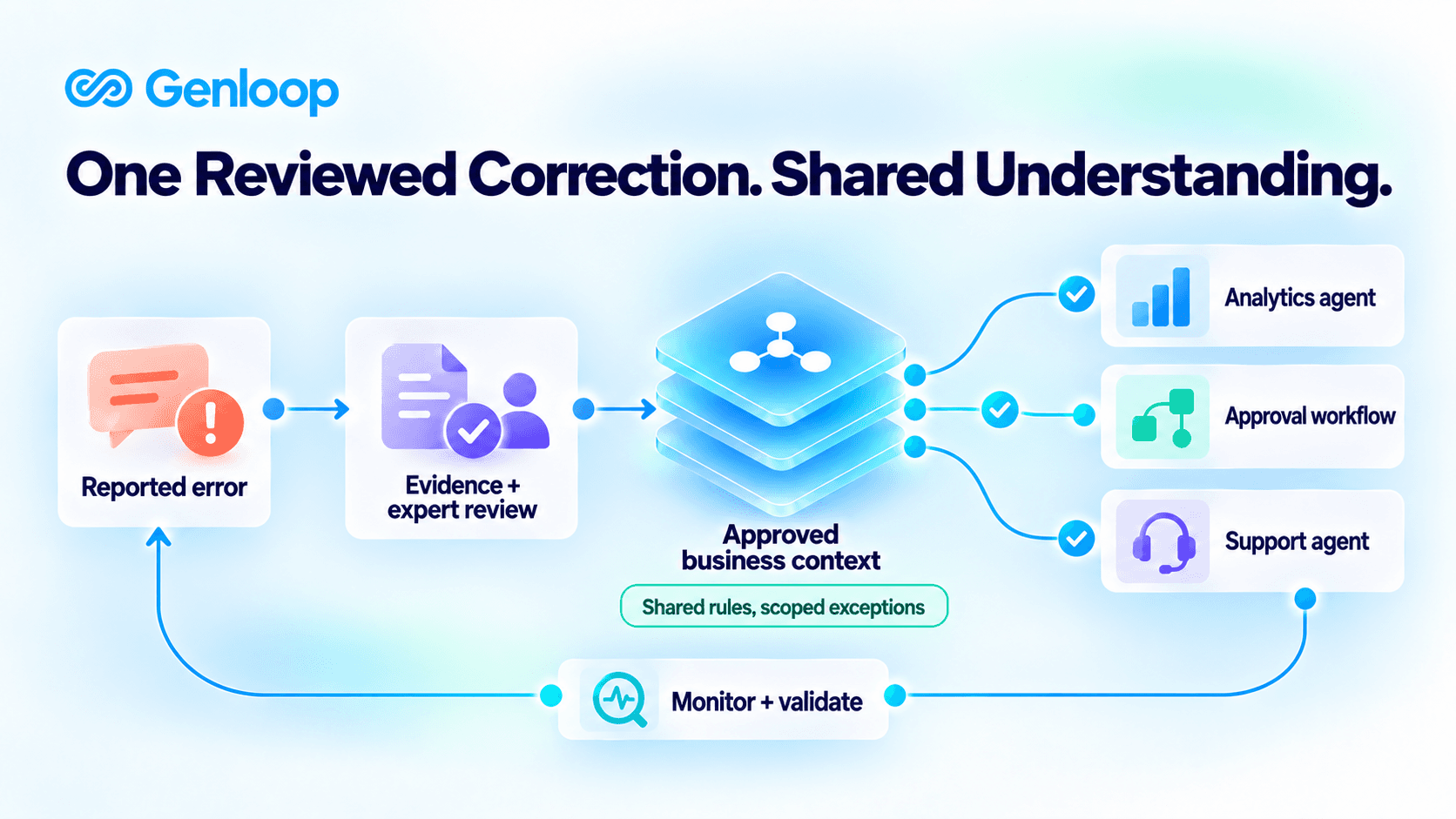
A reliable correction process records the disputed answer, the evidence, the approved interpretation, and the scope of the change. A correction to a shared metric should reach every dependent workflow. A customer specific exception should stay within that customer’s boundary.
Genloop calls this a self learning loop: experts review proposed corrections, approved changes enter shared business context, and dependent context is checked when definitions, policies, or schemas change. Its context intelligence layer links data, processes, decisions, and people so agents can draw on the same approved understanding. These are Genloop’s described product patterns at genloop.ai.
Human approval remains central. An agent can surface a conflict. It cannot decide that finance has changed the meaning of revenue.
Measure the work after launch
Pilot accuracy is a snapshot. Enterprise data leaders also need to know how quickly the system adapts.
Track the time from a source or policy change to a validated agent update. Track how often a corrected issue recurs. Track the share of important answers covered by regression tests, and the number of workflows affected by each change. Record the hours experts spend resolving ambiguity.
These measures expose costs that token and infrastructure reports miss. They also give teams a way to compare architectures. If every new customer or agent requires the same definitions to be rebuilt, maintenance effort will grow with deployment count.
Before expanding an agent program, take the last material change to a KPI, schema, or approval policy. Trace how it reached every affected agent. If that trail depends on people remembering which prompts to edit, the maintenance bill is already due.
FAQ
Why do agents need maintenance if their underlying data is current?
Current records do not guarantee current interpretation. An agent also needs approved metric definitions, policies, ownership, and exceptions. Those can change without breaking a data connection.
Will retrieval from company documents solve this?
Retrieval can find relevant material. It does not, by itself, resolve conflicting versions, identify the current owner, or establish which policy applies to a given customer and date. Those decisions need governed context.
What should teams test when a schema changes?
Test the queries and workflows that depend on the changed source. Include business checks: expected metric definitions, exception handling, permissions, and representative answers. A query that runs successfully can still be wrong.
Who should own corrections?
The business owner approves meaning. Data and engineering teams maintain the path that carries that decision into affected agents and verifies the result. One named owner for each important definition or policy makes that handoff possible.