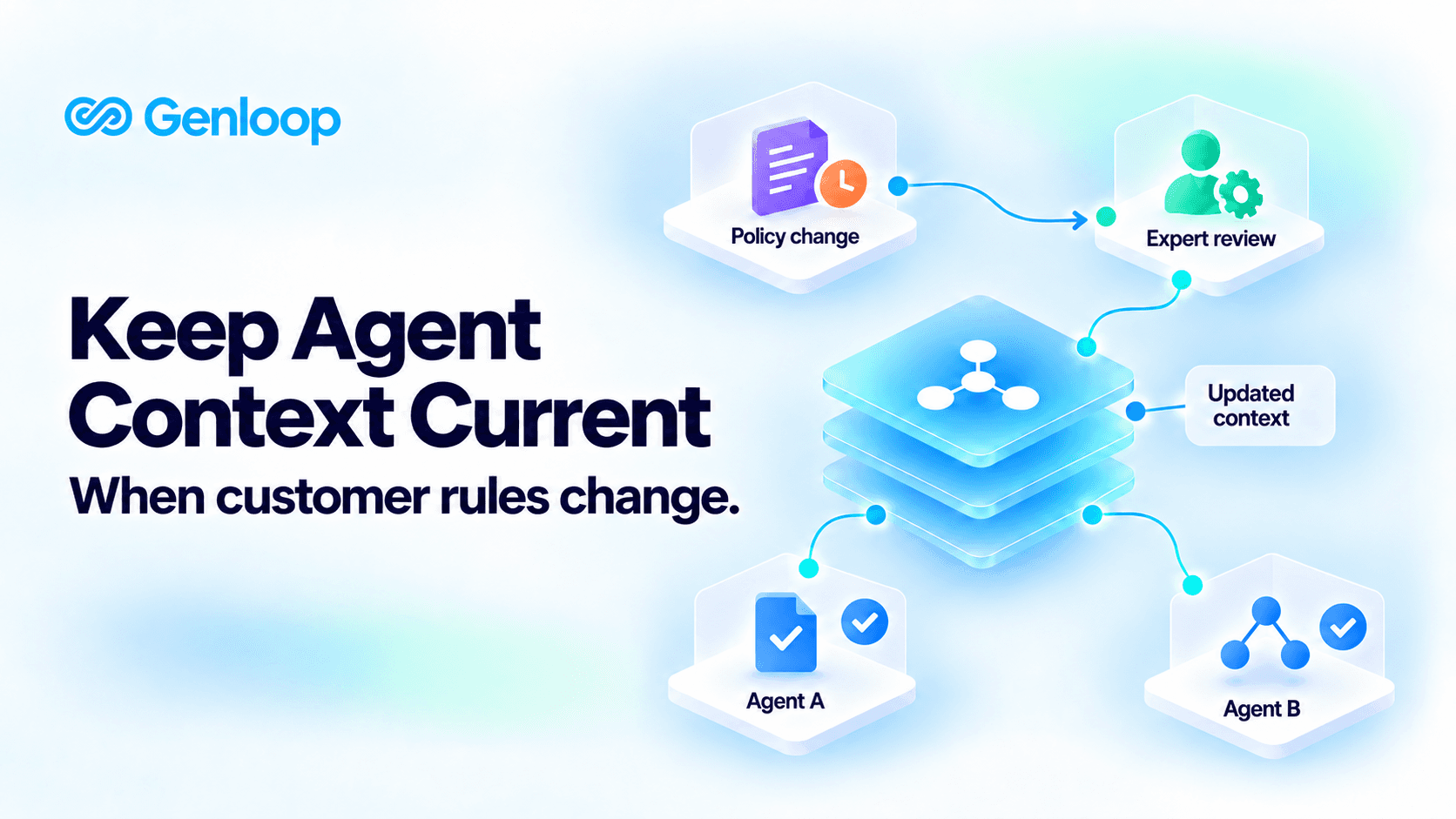
Databricks recently released the Genie Ontology to solve the problem of understanding context. Take a simple case. A CFO asks for last quarter's revenue. Finance says 4.2 million. The growth team says 4.8 million. Both are right in their own context. One counts bookings, the other counts recognized revenue. The distinction is the business context, and it is what gets lost between the question and the answer.
Point a natural-language tool at the same warehouse and it does not settle that disagreement. It answers from whichever definition it happened to find, and you cannot tell which one that was. Databricks built the Genie Ontology to address exactly this. It launched in preview at the June 2026 Data and AI Summit, alongside Genie One and Genie Agents, and it is one vendor's bet on a problem the whole category is working on. This post examines what it does, how it works, and what it asks of you before you can rely on it.
What the Ontology is
The Ontology is a map of your data and business that Genie One generates and maintains automatically. Databricks frames it as a continuously improving, automatically inferred knowledge graph of business terms, entities, and KPIs that grounds Genie's answers. It launched alongside Genie One and Genie Agents at the June 2026 Data and AI Summit and is currently in preview.
The problem it targets is the one every enterprise AI tool runs into. An agent can read your table schemas, but it does not know what the data means to your business. That meaning is scattered across dashboards, queries, pipelines, wikis, tickets, documents, and chat threads. When the agent cannot find it, it fills the gap with inference, and inference is how you get answers that are generic, or confident and wrong. The Ontology is Databricks' bet that this context can be extracted automatically instead of hand-written into prompts one definition at a time. It is the same problem conversational analytics tools are all converging on: the model is rarely the bottleneck, the missing business context is.
How the Ontology works
Genie constructs the Ontology through extraction, scoring, and conflict resolution, with permission enforcement applied at query time.
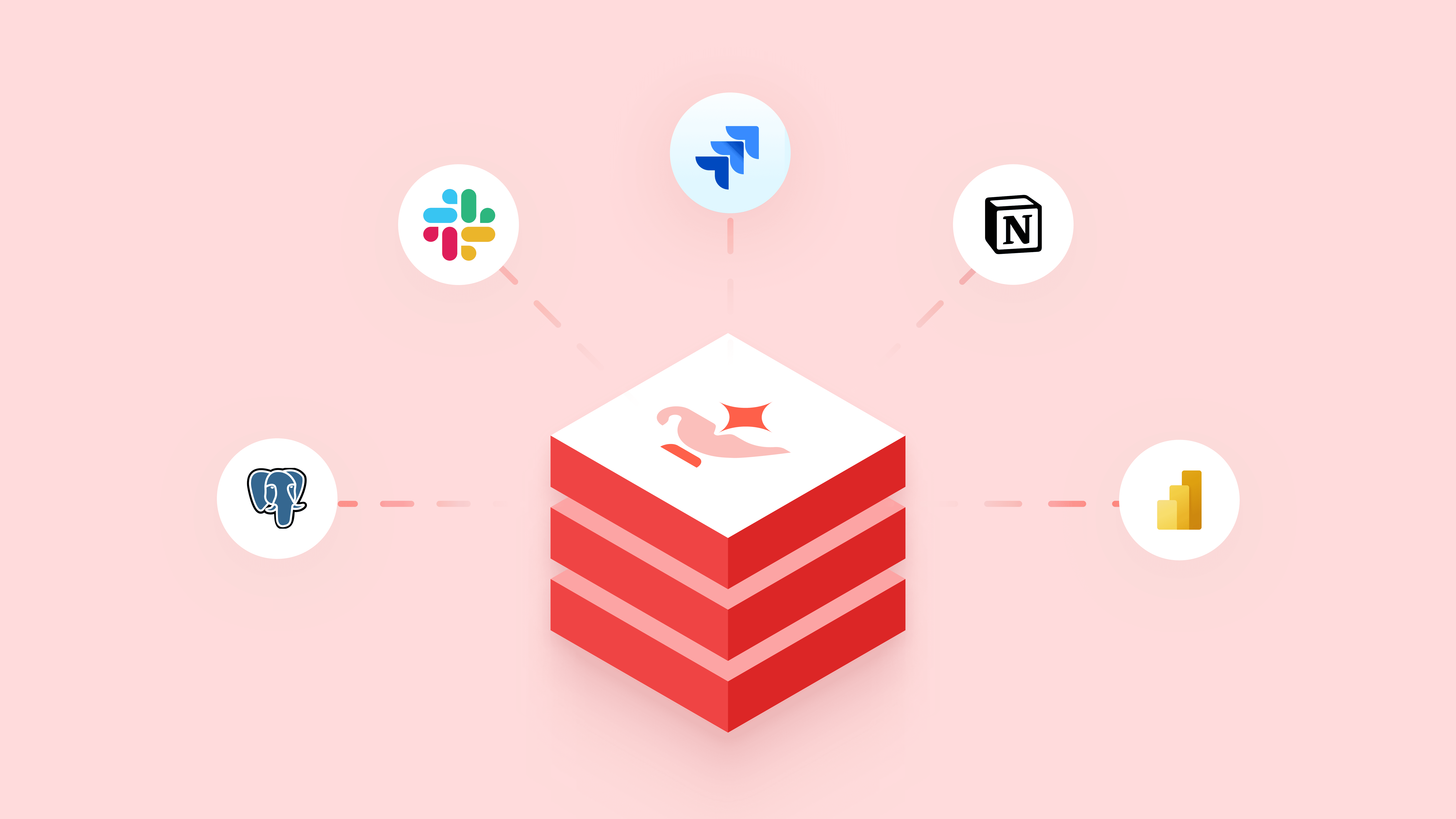
Extraction. Genie extracts small units of knowledge, termed snippets, from tables, queries, dashboards, documents, pipelines, and connected applications. Extraction is not limited to Databricks assets. The system reads from more than fifty connected applications, including Slack, Jira, Google Drive, SharePoint, and Salesforce. Snippets fall into three categories:
Metric definitions specify how a term is calculated, for example an active user defined as a distinct user deduplicated across platforms.
Authoritative sources identify the trusted table for a fact, such as revenue drawn from a specific certified table.
Business rules encode conditional logic, such as a lead qualifying only once a demo is booked.
Authority scoring. Databricks treats scoring as the central mechanism. Each snippet receives an authority score. At the launch keynote the team named the ranking method OntoRank, modeled on PageRank. Where PageRank orders web pages by inbound links, OntoRank orders competing definitions by their apparent trustworthiness within the organization. The score weighs five factors:
The origin of the definition.
The authority of the person or source that created it.
How frequently it is relied upon.
How closely it ties to certified and widely used data assets.
How recently it was updated.
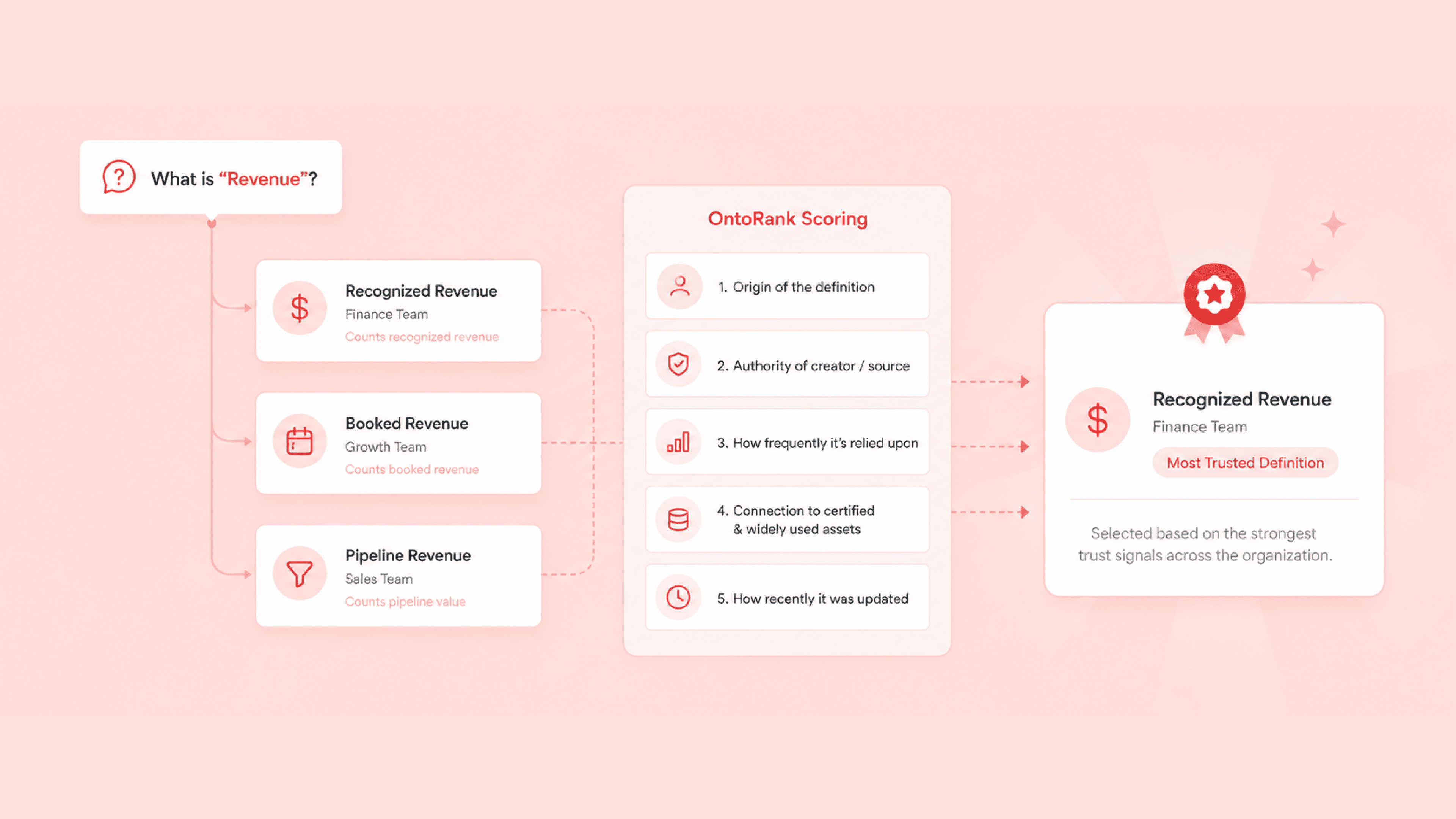
Conflict resolution. Scoring exists to resolve cases such as the revenue example above. When two teams define a term differently, the Ontology does not select arbitrarily. It returns the definition with the strongest trust signals.
Permission gating. Snippets inherit Unity Catalog permissions. When a query is issued, Genie ranks the relevant snippets, resolves conflicts, and answers using only the sources the requester is authorized to access. No answer is constructed from data outside the user's permissions.
Performance rationale. Because Genie retrieves answers from governed definitions rather than reasoning over dispersed fragments, Databricks reports higher accuracy at lower latency and token cost. Its internal benchmark records 84.5% first-attempt accuracy against 52.4% for a strong general-purpose coding agent, at roughly twice the speed. The figure warrants caution: it derives from a 28-question, vendor-run suite rather than an independent evaluation. As an independent reference point on data-reasoning accuracy, Genloop publishes its results on the public Spider 2.0 benchmark.
How you interact with it
From a user's seat, the Ontology is mostly invisible. It works under the hood, and the one direct touchpoint is the citation icons in a response. Click them and you see which snippets fed the answer.
It also takes manual input. You can author definitions yourself through Unity Catalog metric views, also called Business Semantics, which become one trusted, curated input among the many the graph reads automatically. This is the governed place your definitions live, and Genie treats it as a high-authority source.
The curation underneath the automation
One aspect of the design receives little attention. Automated extraction rests on a curated foundation, and the most reliable answers still depend on definitions constructed by hand.
Databricks states that a Genie Space is configured by a SQL-proficient analyst. The manual surface area is substantial:
KPIs are entered as Measures, specifying the name, the SQL calculation, and the synonyms.
Filters and fields are each defined as SQL expressions with their own names and synonyms.
Example queries are authored as gold-standard templates for anticipated questions.
Join cardinality is declared manually so that Genie does not double-count a metric.
Verified answers are marked by hand to indicate which responses to trust.
The documentation describes curating a space as an iterative process. Each new metric, renamed field, or revised definition requires a further edit, and that work falls to the organization's scarcest personnel. Automated extraction reduces the cold-start burden but does not remove the curation beneath it. For a data leader assessing a rollout, this ongoing curation cost is the factor least visible in a demonstration.
Where the Genloop design philosophy splits
The Ontology is a strong answer to the conflicting-definitions problem. A useful comparison is with a system built on a different premise: what to model, how to keep it current, and how a person steers it.
Genie models properties of the data. Its snippets, whether metric definitions, authoritative sources, or business rules, describe what the warehouse contains and which version to trust. Genloop's Living Context Graph extends across four layers, two of which never touch the warehouse:
Data architecture. Tables, columns, and relationships, the layer Genie also covers.
Processes. KPIs, playbooks, and reference documents, applied consistently.
Decisions. The corrections a team has made, stored and reused on later answers.
People. Whose validated knowledge shapes how the system answers for others.
The last two are the distinction. Genie models the data; the Living Context Graph also models how the organization works and decides, so a correction and its reasoning become part of the model rather than remaining in a single conversation.
The two systems also differ in how they stay current. Genie's reliable definitions are curated, and a curated snapshot loses accuracy as the business changes, so it must be refreshed by hand. Genloop's Self-Learning Loop builds the graph when the data is first connected, then updates from usage: each interaction, validated answer, and item of feedback. The human role shifts from authoring definitions to reviewing the ones the system proposes.
That review is where the learning stays visible. Genie's knowledge updates per space without surfacing the change, and citations name an answer's sources but not a definition it has just learned. Genloop's governance flow presents the prior value beside the proposed one and waits for approval, rejection, or an edit before it takes effect. The result is learning that can be inspected, held as one context across the platform, Slack, and Claude via MCP, so a single correction is enforced everywhere rather than re-entered in each system.
Choosing between Genie One and Genloop?
If your team lives inside Databricks, you have SQL-fluent analysts with time to curate, and you want a knowledge layer that respects Unity Catalog, the Ontology fits well. OntoRank is a genuinely smart approach to the conflicting-definitions problem, the permission model is sound, and the citation trail is honest about what each answer used.
If your constraint is analyst capacity, or you want the system to model how your team decides and not just what is in the warehouse, the trade-offs point elsewhere. A context graph that reaches into processes, decisions, and people, a loop that learns those from usage, and a hub that shows you the change before it sticks, together keep the effort low and the context current at the same time.
The Ontology answers how a machine can build and rank its own map of your business. The open questions are who pays the curation cost underneath it, whether the trusted definition produces the correct number, and whether you find out when the map starts pointing somewhere wrong.
If you want to see what a context layer that learns from usage and shows its work looks like on your own warehouse, try Genloop for free.